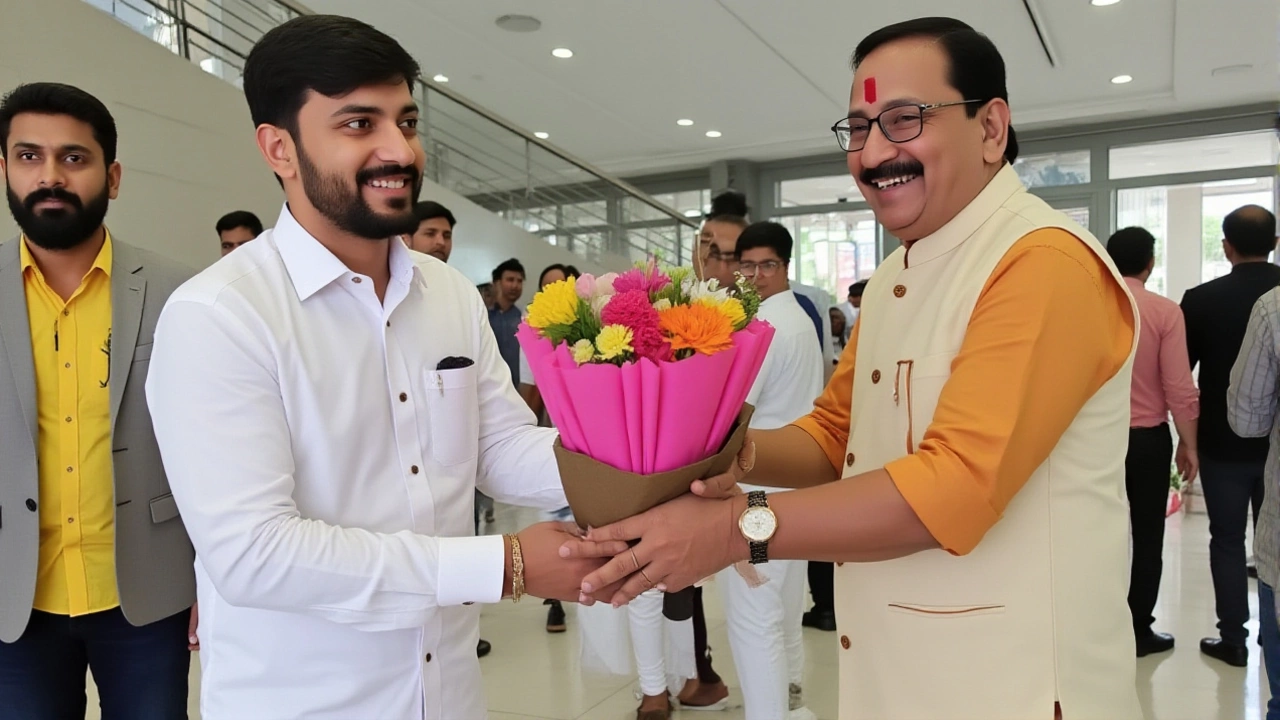
When Rahul Gandhi, Leader of the Opposition in the Lok Sabha and senior leader of the Indian National Congress, took the stage in Rae Bareli on Wednesday, May 20, 2026, he didn't mince words. Addressing a gathering of party workers, he labeled Prime Minister Narendra Modi, Home Minister Amit Shah, and the Rashtriya Swayamsevak Sangh (RSS) as "traitors." The accusation—using the Hindi word *gaddar*—ignited an immediate political firestorm across India.
The remarks weren't made in a vacuum. They came during the second day of Gandhi’s visit to Rae Bareli, Uttar Pradesh, a constituency with deep historical ties to his family’s political legacy. But this wasn't just a local rally; it was a national statement aimed at mobilizing voters ahead of the crucial Uttar Pradesh assembly elections scheduled for next year.
A Sharp Escalation in Political Rhetoric
Here's the thing about election season in India: the temperature rises, and so does the volume. But Gandhi’s choice of language marked a significant shift from standard policy criticism to personal condemnation. In his speech, he alleged that these figures had "sold out Hindustan," attacked the Constitution, and undermined the legacies of Dr. B.R. Ambedkar and Mahatma Gandhi.
"Your Prime Minister is a traitor, your Home Minister is a traitor, your organization is a traitor," Gandhi declared, according to reports from ABP Live and Aaj Tak. He further warned of an impending "economic storm" over the country. This isn't the first time Gandhi has clashed with the current government, but calling the heads of state "traitors" crosses a rhetorical line rarely seen in recent parliamentary discourse.
Media Reaction and Public Backlash
The reaction was swift and severe. Major news outlets like Aaj Tak and ABP Live dedicated prime-time segments to the controversy. On the TV program "Aaj Ki Badi Khabar," anchors questioned whether Gandhi had descended to such levels because he felt he was losing to Modi. The narrative framed the speech not just as opposition critique, but as a desperate attempt to stir emotions before the polls.
Social media platforms lit up instantly. Videos of the speech circulated widely on YouTube and Dailymotion, often accompanied by headlines asking for public opinion. In Uttar Pradesh, where voter sentiment can be volatile, many locals expressed anger. Street interviews showed a segment of the population viewing the comments as disrespectful and inflammatory, rather than constructive criticism.
Expert Analysis: Is This Strategy or Slip?
Veteran journalist Anil Chamiya offered a nuanced take on the developing situation. Speaking to ABP Live, he noted that "speeches become sharper as elections approach." However, he drew a clear boundary between aggressive campaigning and what he termed "unwise rhetoric."
Chamiya argued that politicians should connect with people through facts and historical issues, not by hurling insults without evidence. "It is not wise to make statements against each other like this instead of presenting allegations with facts to the public," he said. His perspective highlights a growing concern among observers: that political polarization is replacing policy debate, potentially alienating moderate voters who value stability over sensationalism.
The Stakes for Uttar Pradesh
Why does this matter? Because Uttar Pradesh is the heartland of Indian politics. With over 80 million voters, its assembly elections in 2027 will determine the balance of power in one of the world's largest democracies. Gandhi’s base in Rae Bareli is traditionally strong, but attacking the central government’s leadership so directly carries risks.
If successful, this strategy could energize the Congress base and frame the upcoming election as a moral crusade against corruption and betrayal. If it backfires, it may reinforce the BJP’s narrative of the opposition being incapable of governance and prone to emotional outbursts. The economic warning Gandhi included suggests he hopes to tie the "traitor" label to tangible concerns about inflation and job security, making the abstract charge feel personally relevant to everyday citizens.
What Happens Next?
We’re likely to see a formal response from the Prime Minister’s Office and the RSS in the coming days. Historically, such accusations are met with counter-allegations of sedition or anti-national activities. Legal experts suggest that while free speech protects political criticism, the term "traitor" could potentially open avenues for defamation suits, though these are often dismissed in court due to their political nature.
For now, the focus remains on the ground game in Uttar Pradesh. Both parties will use this incident to test voter waters. Expect increased rallies, social media campaigns, and possibly police monitoring of large gatherings as tensions rise. The next few months will reveal whether this bold rhetorical gamble pays off or isolates Gandhi further in a crowded political field.
Frequently Asked Questions
Who did Rahul Gandhi call a traitor?
Rahul Gandhi explicitly named Prime Minister Narendra Modi, Home Minister Amit Shah, and the Rashtriya Swayamsevak Sangh (RSS) as "traitors" (*gaddar*) during his speech in Rae Bareli on May 20, 2026. He accused them of betraying the nation and the Constitution.
Why was this speech given in Rae Bareli?
Rae Bareli is Rahul Gandhi’s parliamentary constituency and holds significant symbolic importance for the Congress party. The speech was part of a two-day visit aimed at mobilizing support ahead of the Uttar Pradesh assembly elections scheduled for 2027, leveraging his local influence to set a national tone.
How did the media react to the comments?
Major news channels like Aaj Tak and ABP Live covered the event extensively, framing it as a major political controversy. Editorials and talk shows debated whether the harsh language was a strategic move or a misstep, with veteran journalists criticizing the lack of factual backing for the serious allegations.
What were the specific accusations made?
Gandhi alleged that the targeted individuals and organizations had "sold out Hindustan," attacked the Indian Constitution, and disrespected the legacies of Dr. B.R. Ambedkar and Mahatma Gandhi. He also warned of an impending "economic storm" affecting the country.
Could there be legal consequences for using the word 'traitor'?
While politicians often face defamation suits for harsh rhetoric, courts in India generally afford wide protection to political speech under free expression laws. However, if the claims are proven false and malicious, there is a theoretical risk of legal action, though it is rare for such cases to succeed against elected officials.